What is Band Protocol?


In today's rapidly evolving AI and Web3 landscape, securing reliable real-world data for smart contracts is more crucial than ever. Billions of dollars in DeFi hinge on accurate, trustworthy information—making solutions like Band Protocol a vital backbone for blockchain innovation. Band Protocol is a decentralized oracle network designed to connect blockchains to external data, ensuring that decentralized apps (dApps), DeFi, and AI agents can function securely and transparently. In this comprehensive guide, you'll discover what Band Protocol is, how it powers next-generation dApps, the utility and staking opportunities for the BAND token, key security measures, and ways to get started—from trading on OKX to hands-on integration. Let's dive into how Band Protocol is reshaping DeFi, AI, and the future of data-powered smart contracts.
What is Band Protocol?
Band Protocol is a decentralized oracle network that securely links blockchains with real-world data. By acting as a data bridge, Band Protocol solves a core blockchain challenge: smart contracts can't directly access off-chain information like asset prices, weather, or sports scores on their own. Oracles like Band securely fetch, verify, and deliver this data, unlocking advanced use-cases across DeFi, insurance, gaming, and more.
Founded in 2017 by Soravis Srinawakoon and a team of blockchain engineers, Band Protocol has become a leading middleware provider for Web3 infrastructure. Its cross-chain architecture means Band supplies oracle services to multiple blockchains, including Cosmos, Ethereum, and BNB Chain, making it an essential choice for developers seeking true interoperability.
Major exchanges, including OKX, list BAND, Band’s native token. OKX is not only a place to trade BAND but also leverages real-time data oracles for smarter products and increased trust.
How Oracles Power Web3
Oracles act as an information highway between the blockchain and the outside world. They supply the decentralized data feeds that underpin real-time price tracking in DeFi, dynamic NFT attributes, parametric insurance, and AI-powered applications.
Without oracles, a smart contract remains isolated—unable to respond to real-world events like a soccer match outcome or live market rates. Band Protocol minimizes trust in any single source by aggregating data from multiple reputable providers, then distributing it across validators for further security. This trust-minimized approach is vital for building robust, censorship-resistant Web3 applications.
How Band Protocol Works: Oracles, Decentralization, and DPoS
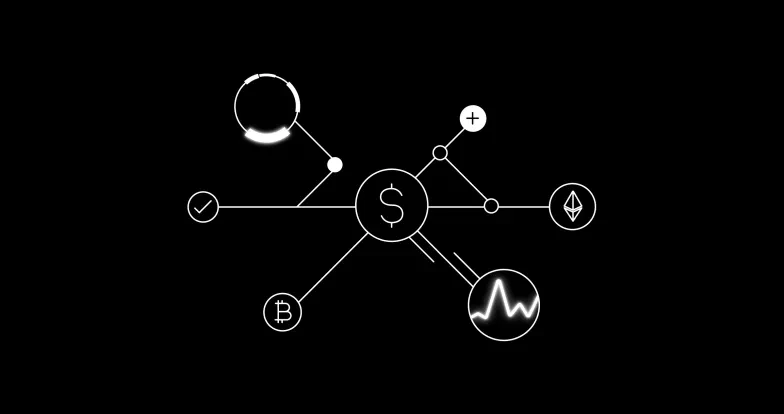
Band Protocol's workflow starts when a dApp requests external data—such as an ETH/USD price feed. The system divides participants into data requesters (app developers needing data), validators (nodes that fetch and verify it), and aggregators (nodes that compile and relay the trustworthy response).
Band utilizes a Delegated Proof-of-Stake (DPoS) consensus model. This boosts scalability and security by allowing token holders to delegate their stake to professional validators, who are then rewarded for accurate data delivery and penalized for poor performance.
Band's oracles can provide a diverse range of data: from asset prices for DeFi protocols, to insurance events, to real-time context for AI models. This versatility supports countless blockchain-powered applications in an increasingly data-hungry world.
DPoS and the Validator Ecosystem
In Band Protocol, validation is performed by a vetted set of node operators or 'validators.' Anyone holding BAND tokens can delegate them to a validator, boosting the node's influence and earning a share of the rewards. This system encourages honest behavior because misbehaving validators (e.g., providing false data) can be penalized through slashing.
DPoS accelerates transaction speeds and strengthens network integrity since only a limited set of validators process each request, but they're backed by thousands of token holders. This keeps the system efficient without sacrificing decentralization.
Trusted Data Sources and Aggregation
Band doesn’t just rely on one or two feeds. Data is sourced from a variety of premium providers—such as crypto APIs, financial market data firms, sports data companies, and more. Multiple validators independently retrieve, verify, and cross-reference data points, ensuring redundancy and resistance to manipulation.
The result is an aggregated answer, digitally signed and transmitted directly to smart contracts across supported blockchains. This process guarantees high availability, accuracy, and tamper-evidence—crucial for powering mission-critical DeFi, AI, and exchange products, including those on platforms like OKX.
Band Protocol Token (BAND): Utility, Staking, and Governance
The BAND token is central to the security and functionality of Band Protocol. With a total supply initially set at 100 million, BAND’s distribution supports validator incentives, ecosystem growth, and network security. Like many proof-of-stake ecosystems, token inflation provides ongoing staking rewards, though the rate decreases over time.
BAND token utility includes:
- Staking: Help secure the network and earn rewards by delegating BAND to validators
- Governance: Vote on major upgrades and protocol parameters, influencing Band’s evolution
- Payment for data requests: dApps pay validators in BAND for timely, accurate service
Staking not only keeps the oracle system decentralized but also aligns incentives for network health and longevity.
How to Stake BAND
Staking BAND involves delegating your tokens to a validator, who then carries out data validation tasks on your behalf. You can stake BAND directly from your wallet or through exchanges like OKX, which offer simplified staking experiences.
💡 Pro Tip: On OKX, users can stake BAND with just a few clicks—no advanced technical knowledge needed. After buying BAND on OKX, navigate to 'Earn' and select BAND to view current APYs and delegate instantly.
To participate:
- Acquire BAND on OKX or another exchange.
- Choose a reputable validator (either via OKX staking platform or manual delegation).
- Delegate your tokens, track rewards, and claim them as desired.
- Remember to keep your BAND in a secure crypto wallet, and enable 2FA for safety.
Governance and Upgrades
Holders of BAND can propose and vote on protocol upgrades, fee structures, and security updates. On-chain governance means real stakeholders—token holders and validators—decide the project’s roadmap. This process ensures Band Protocol evolves with community needs, and adapts to technology advances or emerging security threats.
Ecosystem, Partners, and Real-World Adoption
Band Protocol's reach extends far beyond its core network. Its oracles are trusted by a wide range of applications in DeFi, insurance, gaming, and AI. Notable dApps—including Venus, C.R.E.A.M. Finance, and Injective Protocol—depend on Band for secure and real-time data.
Band prides itself on cross-chain compatibility, with integrations on blockchains like Cosmos, Ethereum, Polygon, Fantom, and BNB Chain. Real-world adoption is shown through ecosystem stats: Band processes millions of price updates daily and secures billions in value across applications.
Strategic partnerships reinforce Band’s reliability and breadth. From tech firms (Google Cloud) to exchanges (OKX), collaborations expand not just adoption but also developer resources and security best practices.
Top Projects Using Band Protocol
- Venus Protocol (BNB Chain): Lending/borrowing with real-time price feeds
- Injective Protocol: Decentralized trading platform using Band for asset pricing
- C.R.E.A.M. Finance: Lending/borrowing platform
- Sequoia Games: Web3 sports gaming using event data
- OKX: Integrates Band oracles for data-driven exchange products
💡 Pro Tip: Follow Band’s official ecosystem page for new integrations and developer updates.
AI and Web3: Band’s Solution for Real-Time AI Data (Membit & LLM Integration)
As AI increasingly interacts with the blockchain world, the need for up-to-date, trustworthy data for training and inference grows. Band Protocol has responded with features like Membit—an infrastructure designed to connect Large Language Models (LLMs) and AI agents directly to verified, on-chain data.
Membit allows smart contracts and AI-based applications to query and receive contextually rich, real-time information. This is essential for use-cases like on-chain knowledge graphs, decentralized prediction markets, and self-improving AI models.
Compared to other oracles, Band offers flexibility, lower latency, and native tools for verifying data provenance, making it uniquely suited for AI-driven dApps and knowledge agents.
Updating AI with Verified Blockchain Data
Picture an AI agent that answers blockchain-related questions for a decentralized trading platform. Using Membit, the agent can fetch and verify token prices, governance proposals, or even the results of sports matches—directly from the Band oracle, with cryptographic proof.
This ensures that AI outputs are not only accurate but also transparently auditable. For projects using AI to automate DeFi positions or update prediction models, Band’s approach guarantees reliability. Partners like OKX can leverage these features to build smarter bots and enhance platform integrity.
How to Use Band Protocol: DeFi, Trading, and AI Apps (Step-by-Step Guide)
Getting started with Band Protocol is straightforward, whether you're a trader, staker, or developer.
For DeFi users:
- Buy BAND: Use OKX to purchase BAND with crypto or fiat.
- Store BAND: Transfer your tokens to a secure crypto wallet for safekeeping.
- Stake BAND: On OKX, simply select the BAND staking product and delegate your tokens in a few clicks.
For developers integrating Band into dApps or AI:
- Access Documentation: Band Protocol provides dev resources for fetching and validating oracle data.
- Integrate a Data Feed: Connect your dApp smart contract to Band’s price or custom API oracle through provided modules.
- Test in Sandbox: Use testing environments to simulate requests and responses.
- Go Live: Deploy on supported blockchains—Cosmos, Ethereum, BNB, Polygon, and more.
Band Protocol on OKX: Buy, Store, Stake
- Sign up or log into your OKX account
- Search for 'BAND' and complete your purchase
- Store BAND in your OKX wallet or transfer to a non-custodial wallet
- Navigate to 'Earn' to start staking—check APY, minimums, and lock-up terms
OKX offers a seamless experience for buying, transferring, and staking BAND, with clear dashboards for monitoring your portfolio.
Integrating BAND Oracles into dApps
- Visit Band’s developer documentation
- Add oracle module to your smart contract
- Select data type (price, event, AI context, etc.)
- Use code examples/templates for Solidity, CosmWasm, or other supported languages
- Test your integration and deploy
Band Protocol vs. Chainlink vs. Pyth: Oracle Comparison
Choosing the right oracle matters for reliability, speed, and cost. Here’s a side-by-side comparison of Band, Chainlink, and Pyth:
| Oracle | Supported Chains | Consensus Model | Data Types | Fees | Governance |
|---|---|---|---|---|---|
| Band | Cosmos, Ethereum, BNB, more | DPoS | Price, events, AI | Low/Custom | On-chain (BAND) |
| Chainlink | Ethereum, BNB, more | PoR/External | Price, events | Med-High | Off-chain/Service |
| Pyth | Solana, EVM, Cosmos | Proof-of-Authority | High-frequency prices | Low | Service/Delegated |
Band Protocol excels with fast response times, multi-chain support, and support for AI/complex data, making it a strong option for fast-changing markets and AI applications. Governance is fully on-chain, empowering token holders and the community. While Chainlink remains the market leader and Pyth specializes in high-speed price feeds, Band’s flexibility and cross-chain integration make it a preferred choice for exchanges like OKX and dApps that need bleeding-edge services.
Security, Audits, and Risk Management
Band Protocol has undergone multiple third-party security audits, ensuring robust protection against manipulation and software bugs. Auditors like CertiK and PeckShield have reviewed smart contract code, validator infrastructure, and oracle data aggregation processes, reporting solid results and timely remediations.
The validator network is secured by DPoS—validators are required to stake significant BAND, aligning their incentives with the protocol’s safety. Redundancy comes from multi-source aggregation: no single data provider or validator can compromise the system. For exchanges like OKX, Band can deliver proof-of-reserves data, enabling clients to independently verify platform solvency and asset backing.
To further minimize risk, Band is exploring insurance options for protocol users, offering extra peace of mind for dApps handling user funds.
💡 Pro Tip: Always enable two-factor authentication (2FA) on your exchanges and wallets, and never share your private keys.
Frequently Asked Questions
What is Band Protocol and what problem does it solve?
Band Protocol is a decentralized oracle network designed to connect blockchains to real-world data, including prices, events, and AI context. It addresses the key limitation of smart contracts, which cannot access external data natively. With Band, DeFi and Web3 apps receive secure, up-to-date information, unlocking powerful use-cases for users and developers.
Is Band Protocol better than Chainlink or Pyth?
Each oracle excels in specific situations. Band Protocol stands out for its speed, cross-chain flexibility, and unique focus on AI data feeds. Chainlink is known for market leadership and vast partnerships, while Pyth provides ultra-fast prices, mainly on Solana/EVM. For real-time, multi-chain, and AI-integrated needs, Band offers compelling advantages.
How do I buy and stake BAND on OKX?
To buy BAND on OKX, register an account, deposit funds, search 'BAND,' and place your order. For staking, go to OKX Earn, select BAND, and delegate tokens—check minimums and APY. Rewards accrue automatically; you can claim them periodically within the OKX dashboard or mobile app.
Is Band Protocol secure?
Yes. Band Protocol leverages a Delegated Proof-of-Stake model and relies on professional validators. Regular third-party audits and multi-source data aggregation bolster its security. The system includes redundancy, insurance options, and incentives to protect against failure or manipulation.
How does Band Protocol support AI and Web3?
Band enables AI and Web3 by supplying on-chain, verified data for LLMs and automated agents. With Membit, developers can connect smart contracts or AI bots to real-time price feeds, event triggers, and more, ensuring trustworthy intelligence for next-gen dApps.
What blockchains does Band Protocol support?
Band Protocol supports Cosmos, Ethereum, BNB Chain, Polygon, Fantom, and other major blockchains—ensuring wide developer adoption and cross-chain reliability.
Conclusion
Band Protocol is reshaping decentralized data by reliably linking blockchains, AI applications, and DeFi platforms to real-world information. Its DPoS-secured oracle network empowers developers, while the BAND token enables community-led growth through staking and governance. Whether you’re building dApps, trading, or staking, Band Protocol provides trust, speed, and flexibility—making it a leading choice for projects and exchanges like OKX. Try trading or staking BAND on OKX today and experience the benefits of reliable, decentralized oracles firsthand.
Disclaimer: Crypto trading and staking involve risks. Always do your own research, only invest what you can afford to lose, and use strong security practices on all platforms and wallets.
© 2025 OKX. Tento článek může být reprodukován nebo šířen jako celek, případně mohou být použity výňatky tohoto článku nepřekračující 100 slov za předpokladu, že se jedná o nekomerční použití. U každé reprodukce či distribuce celého článku musí být viditelně uvedeno: „Tento článek je © 2025 OKX a je použit na základě poskytnutého oprávnění.“ U povolených výňatků musí být uveden název článku a zdroj, a to např. takto: „Název článku, [místo pro jméno autora, je-li k dispozici], © 2025 OKX.” Část obsahu může být generována nástroji umělé inteligence (AI) nebo s jejich asistencí. Z tohoto článku nesmí být vytvářena odvozená díla ani nesmí být používán jiným způsobem.